Cross-contamination is one of the main causes of food poisoning. It happens when bacteria or allergens move from one source onto food, and in a busy kitchen it can happen very easily.
For any food business, knowing how to prevent cross-contamination is a core part of commercial kitchen health and safety.
The most effective ways of preventing cross-contamination in a commercial kitchen are:
– Keeping raw and ready-to-eat foods apart during storage and preparation.
– Using dedicated or colour-coded equipment for different foods and areas.
– Washing hands thoroughly between tasks.
– Cleaning and disinfecting surfaces and equipment after each job.
Below, we explain how cross-contamination happens and then walk through each step in more detail.
What Is Cross-Contamination?
Cross-contamination is when bacteria transfer from a contamination source onto food. A common example is raw meat passing bacteria onto a cooked or ready-to-eat product.
Ready-to-eat food is the biggest concern. It won’t be cooked again before it is served, so there is nothing to kill the bacteria along the way.
Allergens can spread in the same way. A trace of nuts or sesame on a shared knife can end up in a dish that is meant to be free from them. Cooking does not destroy allergens, so separation and cleaning are your main controls.
There are two ways bacteria can reach food.
Direct Cross-Contamination
Direct cross-contamination is when the source of the bacteria touches the food itself. Raw meat touching cooked meat in the fridge, for example.
Indirect Cross-Contamination
Indirect cross-contamination is when bacteria hitchhike on something else to reach food. Bacteria can’t move far on their own, so they need a vehicle to carry them.
That vehicle is often something your team uses all day, like their hands, a knife or a cleaning cloth. Door handles, taps and light switches can also pass bacteria along.
Once you know the routes bacteria take, it becomes much easier to block them. A HACCP plan works in the same way, by finding the risk points at each stage of food handling.
How Does Cross-Contamination Happen in a Commercial Kitchen?
Cross-contamination in a commercial kitchen usually happens through shared equipment, poor separation, careless storage, unwashed hands or dirty cleaning tools.
Using the Same Equipment for Different Foods
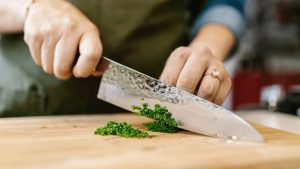
If a chopping board is used for raw chicken and then for salad, the bacteria goes straight onto the next food it touches. The same applies to tongs, bowls, scrapers and storage containers. A quick rinse under the tap will not remove bacteria, so shared tools need a full clean and disinfection before they are used on a different food.
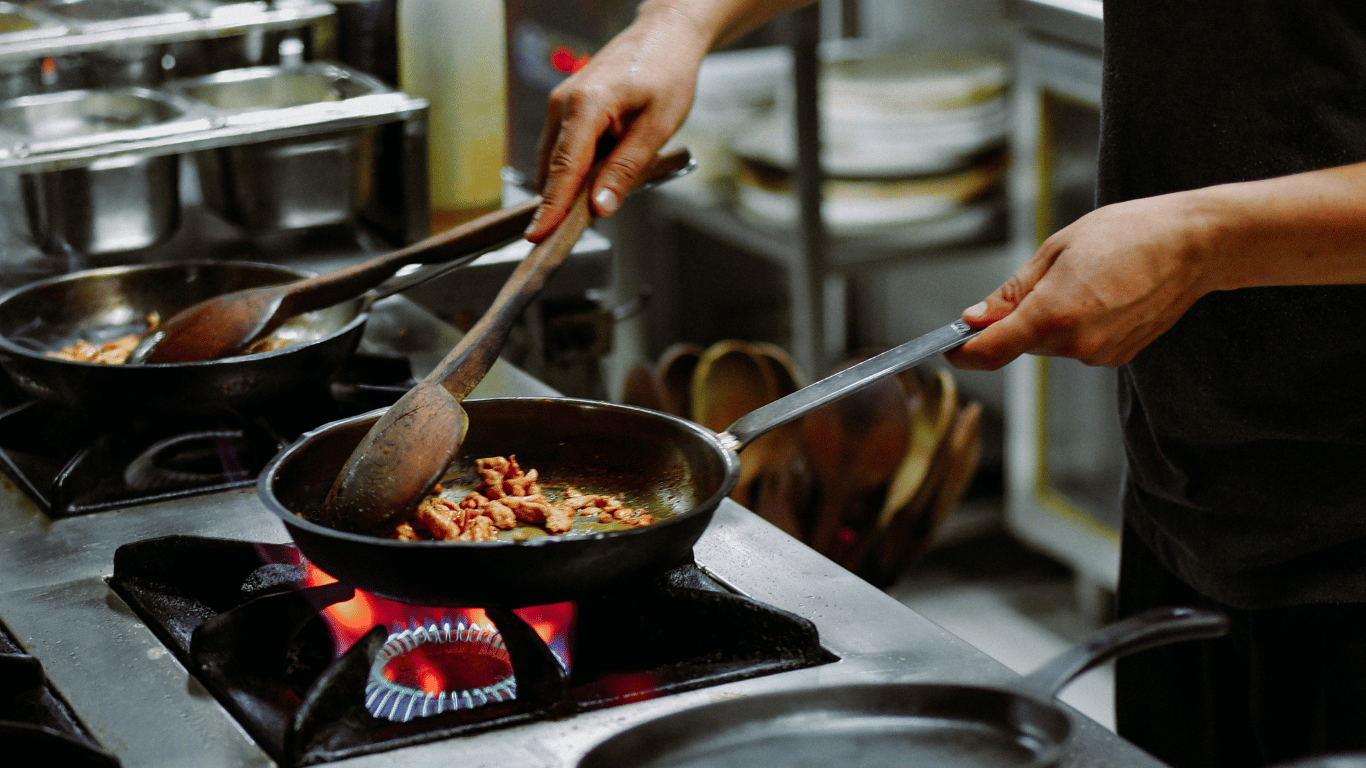
Some machines are too complex to clean properly between jobs. Food Standards Agency (FSA) guidance says vacuum packers, slicers and mincers should not be used for both raw and ready-to-eat food during a normal business day.
Not Keeping Raw and Ready-to-Eat Food Apart
When raw and ready-to-eat foods are prepared side by side, splashes, drips and shared surfaces can carry bacteria across. The FSA asks food businesses to keep raw and ready-to-eat food apart through separate areas, staff, utensils and equipment. Where that is not possible, any area used for both must be cleaned and disinfected between tasks.
Storing Food in the Wrong Place
Storage is one of the most common sources of direct cross-contamination. Raw meat kept above cooked food can drip juices onto it, and uncovered food is also at risk from whatever is stored next to it.
Hands, Gloves and Clothing
Hands touch almost everything in a kitchen, so they are one of the easiest ways for bacteria to travel. Gloves don’t fix this either. They pick up bacteria just like skin does, so they need changing between tasks.
Cleaning Equipment Spreading Contamination
Cleaning tools can also spread contamination. A cloth used on a raw meat bench and then on a serving counter takes bacteria with it. A bench brush can carry nut crumbs from one table to the next.
That’s why the FSA recommends disposable cloths and separate cleaning equipment for raw and ready-to-eat areas. Colour-coded dustpans and brushes make it easy to see which area each tool belongs to.
How to Prevent Cross-Contamination in a Commercial Kitchen?
You prevent cross-contamination in a commercial kitchen by blocking the routes bacteria use to reach food.
1. Keep Raw and Ready-to-Eat Food Separate
Raw and ready-to-eat food should be kept apart at all times. Where possible:
– Prepare them in separate areas.
– Store them on separate shelves or in separate fridges.
– Keep equipment used for raw food out of clean areas.
The FSA treats shared areas as the highest-risk option, so this approach needs a strict, written cleaning procedure.
2. Use Colour-Coded Equipment
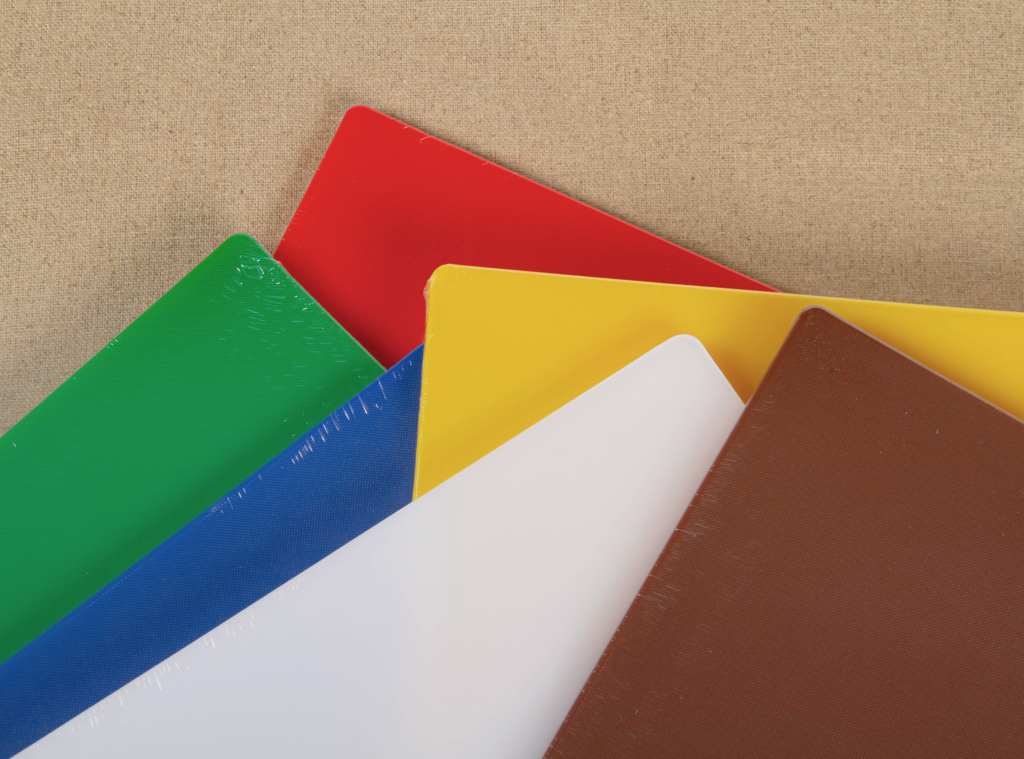
Colour coding gives each food type or area its own set of tools, so staff can see at a glance which equipment belongs where. It also makes training quicker for new and seasonal staff.
Colour-coded equipment can include chopping boards, knives, scoops, bowl scrapers, pastry wash brushes, food thermometers and dustpans.
– red for raw meat
– blue for raw fish
– yellow for cooked meat
– green for salad and fruit
– brown for vegetables
– white for dairy and bakery
– purple for allergen control
There is no legal colour scheme in the UK. Pick one, add it to your food safety plan and put a colour chart on the wall.
Our colour-coded utensil range covers everything from chopping boards to food thermometers. For help choosing a system, read our guide to the kitchen colour coding system.
3. Keep Preparation Areas Tidy
A tidy prep area makes good commercial kitchen hygiene much easier. When benches are cluttered, it’s easy for the wrong tool to end up in the wrong place.
Give each zone its own equipment and keep it there. Clear away anything you don’t need for the job in hand, and wipe up spills straight away. Kitchen storage shelving helps keep tools and ingredients off work surfaces.
4. Clean and Disinfect Equipment Properly
Cleaning and disinfecting are two different jobs. Cleaning removes food, grease and dirt. Disinfecting reduces bacteria to a safe level, but it only works on a surface that has been cleaned first.
So always clean first, then disinfect. Do this between tasks and whenever you switch from raw to ready-to-eat food.
– Use a disinfectant that meets BS EN 1276 or BS EN 13697 and leave it on for the time on the label.
– Put utensils through a commercial dishwasher where you can.
– Use disposable cloths, or wash reusable ones on a hot cycle after each use.
– Clean your cleaning tools as well.
5. Wash Your Hands Properly
Handwashing is the main defence against indirect cross-contamination, because hands touch more surfaces than any tool. Staff should wash their hands thoroughly with soap and warm water:
– Before starting work and before handling food.
– After handling raw meat, poultry, fish, eggs or unwashed vegetables.
– After touching bins, waste or cleaning chemicals.
– After using the toilet, eating or taking a break.
– After touching their face, hair or phone.
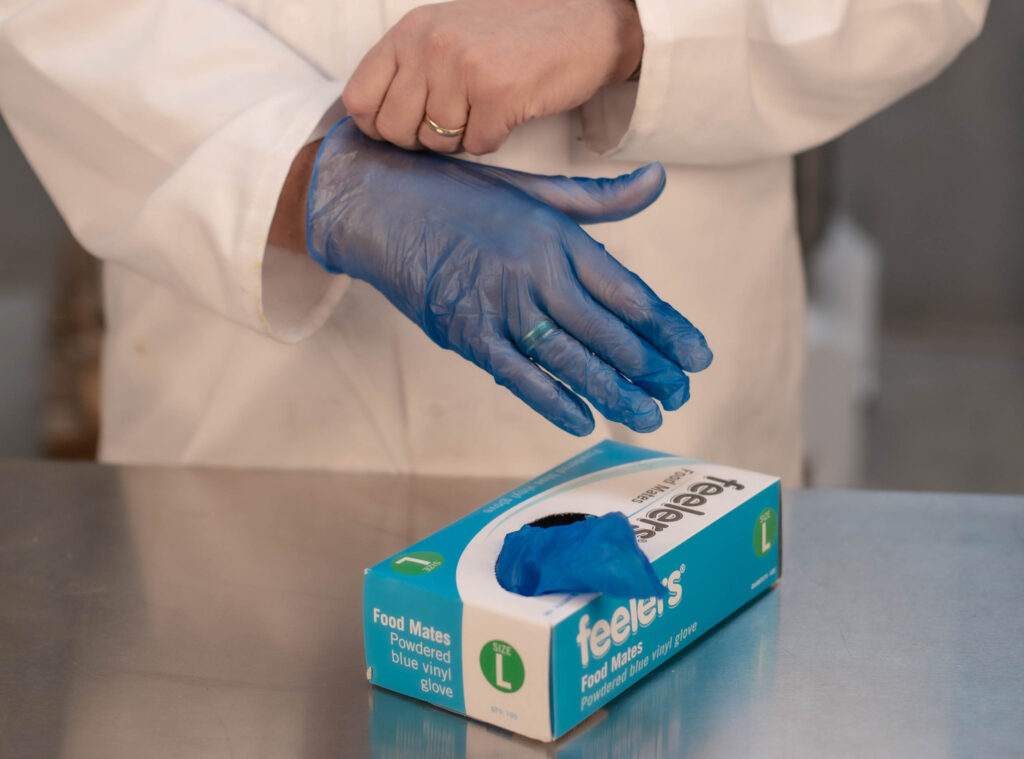
FSA guidance says gloves and hand gels cannot replace handwashing. Gloves should be changed as often as hands would be washed, with a handwash each time they come off.
It also helps to keep a sink just for handwashing. Taps that work with a sensor, knee or elbow mean fewer surfaces for hands to touch.
6. Prevent Allergen Cross-Contamination
Allergen cross-contamination needs its own controls, because cooking does not remove allergens from food. UK food businesses must provide information on 14 major allergens, and a tiny trace can cause a serious reaction.
– Store allergen ingredients in sealed, labelled containers on lower shelves.
– Use separate or clearly marked utensils for allergen-free orders.
– Clean down surfaces and equipment before you start.
– Prepare allergen-free food first, or in a separate area.
– Make sure staff know which products contain which allergens.
7. Store and Protect Food Correctly
Correct storage stops contamination before food reaches the preparation bench. Most storage problems involve raw food leaking onto or touching ready-to-eat items.
– Store raw meat, poultry and fish on the bottom shelves of the fridge, below cooked and ready-to-eat food.
– Keep food in covered containers whenever it is not being prepared.
– Label containers with the contents and date.
– Keep dry ingredients in sealed ingredient storage bins off the floor.
– Keep the premises free from pests, as flies and rodents carry bacteria onto food and surfaces.
Our guide on how to keep your kitchen safe from insects covers the practical steps for keeping flying pests out of food areas.
What Equipment Helps Prevent Cross-Contamination?
The equipment that helps most with preventing cross-contamination falls into four groups: colour-coded utensils, cleaning tools, protective clothing and food storage. Each group gives staff a simple, visible way to keep foods, areas and tasks apart.
Colour-Coded Utensils
Colour-coded utensils such as boards, knives, scoops, scrapers and brushes let each food type or zone keep its own tools. Our colour-coded range is HACCP compliant and includes large plastic scoops for ingredient bins and large plastic scrapers for dough and benches.
Cleaning Equipment
Cleaning tools need the same separation as preparation tools. Assign colour-coded dustpans, brushes and floor scrapers to each zone, so a brush from the raw area never reaches a pastry bench. Larger bakeries can also clean trays and equipment on site with dedicated cleaning machines.

Protective Clothing
Clean protective clothing stops hair, fibres and bacteria on staff from reaching food. Our kitchen workwear range covers bakers’ coats, shirts and trousers, and our hygiene and safety range includes mob caps, beard snoods and disposable gloves. Staff should change protective clothing when it gets dirty or when they move from raw to ready-to-eat work.
Food Storage and Display Equipment
Good storage and display equipment keeps food covered and separated after preparation. Cold storage gives raw and ready-to-eat ingredients their own space, while colour-coded bag sealing tape from our food packaging range helps staff tell products apart.
Finished goods also need protection once they are on display. Our display trays are made from scratch-resistant SAN plastic that is easy to clean between uses.
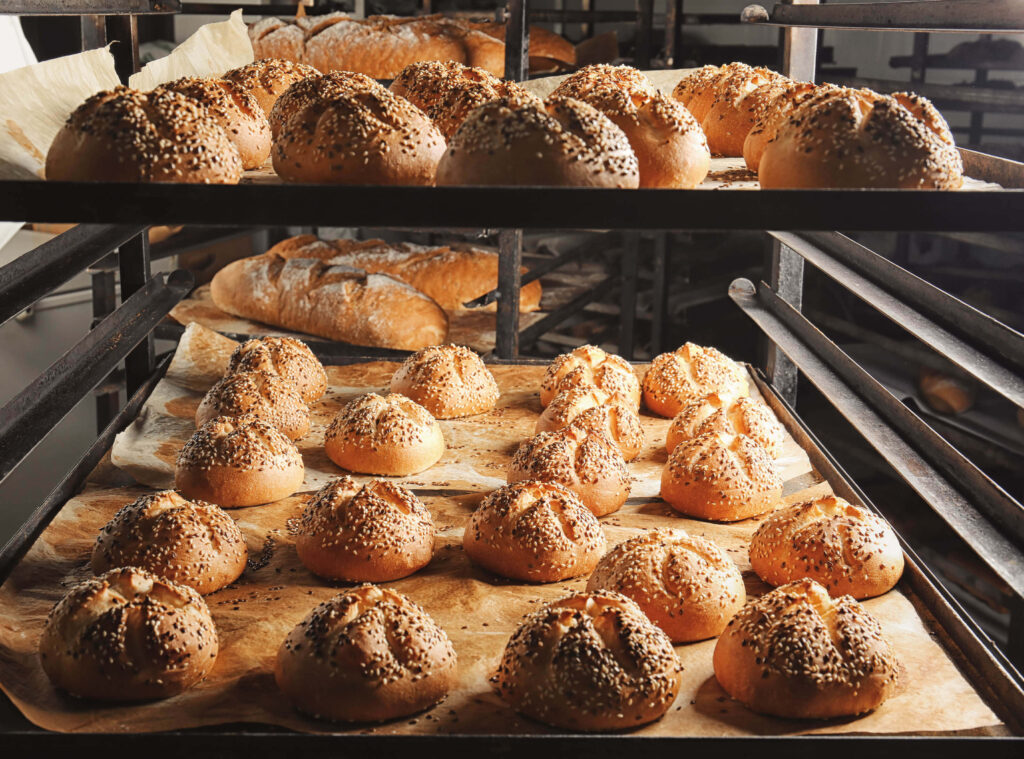
How Should a Commercial Kitchen Be Organised to Prevent Cross-Contamination?
A commercial kitchen should be organised so food moves in one direction, from delivery through to service. That way, raw and ready-to-eat food never needs to cross paths.
| Stage | Risk | Control |
|---|---|---|
| Delivery | Dirty packaging coming into clean areas | Unpack at one set point and move food straight to storage |
| Storage | Raw food dripping onto ready-to-eat food | Raw food on the bottom shelf and everything covered |
| Preparation | Shared tools and worktops | Separate zones and colour-coded equipment |
| Cooking | Cooked food going back onto raw trays or tools | Clean trays and utensils, and a clean probe between foods |
| Cooling | Cooked food left near raw food | Cool it covered and away from raw ingredients |
| Serving | Finished food handled or left open | Covered displays and separate serving utensils |
| Cleaning | Dirty tools moving between zones | Cleaning tools kept to their own zone |
How Can Bakeries Prevent Cross-Contamination?
Bakeries prevent cross-contamination in the same way as any kitchen, by keeping raw ingredients, allergens and finished products apart. The challenge is that flour, eggs, nuts and dairy often share one room.
Flour dust can carry allergens across that room. Raw flour and raw egg can both carry harmful bacteria too. These habits help keep cross-contamination under control in bakeries:
– Give each allergen ingredient its own sealed bin and scoop.
– Keep pastry brushes used for raw egg wash away from finished products.
– Keep dough away from cooling racks and finished goods.
– Pack finished products in their own area, using clean tongs or gloves.
Shared machines like dough mixers and dividers need a thorough clean between allergen and allergen-free batches.
For more on bakery food safety, read why food safety should be a top priority in your bakery.
Cross-Contamination Prevention Checklist
Our checklist covers the main cross-contamination controls to check before, during and after service. It works for bakeries, cafés and commercial kitchens of any size.
Before Service
– Are raw and ready-to-eat foods stored separately?
– Are the correct colour-coded utensils in each zone?
– Have preparation surfaces been cleaned and disinfected?
– Are cleaning tools stored in their assigned areas?
– Are allergen ingredients sealed and clearly labelled?
– Are storage containers clean and covered?
During Service
– Are staff washing their hands between tasks?
– Are gloves being changed between tasks?
– Are raw food utensils staying in the raw preparation area?
– Are spills being cleaned up straight away?
– Is ready-to-eat food covered and protected?
After Service
– Has all equipment been cleaned and disinfected?
– Have cleaning tools been cleaned and returned to their zones?
– Has waste been removed from food areas?
– Are preparation areas clean and ready for the next shift?
Prevent Cross-Contamination With the Right Equipment
At Creeds Direct, we have more than 60 years of experience supplying professional bakeries and food businesses across the UK. Our team includes former professional bakers who understand the practical demands of working in a busy commercial kitchen, so we can offer advice based on real bakery experience.
Browse our food safety equipment, including colour-coded utensils, cleaning equipment and protective clothing, or contact our team for advice on choosing the right equipment for your kitchen.