Choosing a bread moulder for your bakery depends on the breads you produce, the weight of your dough pieces and how many you need to shape each hour. Once you’ve narrowed down the models that can handle your products, you need to consider the machine’s size and your budget.
Creeds Direct sells bread moulder machines for commercial bakeries and professional kitchens. Our range includes a tabletop finger roll moulder, two Merand baguette moulders and a floor-standing universal moulder for tin bread, Vienna loaves and French sticks.
Here we will compare their specifications side by side and match each machine to a type of production.
Compare the Bread Moulders at Creeds Direct
The dough weight range and hourly capacity are the best place to start when comparing bread dough moulders. They tell you whether a machine can handle the products you make and the volumes you need to produce. From there, you can look at the machine’s size and price to see which options work for your bakery.
Bread moulder capacity, dimensions and price compared
| Feature | Small Loaves/Finger Rolls Moulder (F300) | Horizontal Baguette Moulder (A19210) | Vertical Baguette Moulder (A19153) | Universal Bread Moulder (M70-U) |
|---|---|---|---|---|
| Brand | Dell’oro | Merand | Merand | Colbake |
| Machine type | Tabletop moulder | Horizontal baguette moulder | Vertical baguette moulder | Floor-standing universal moulder |
| Breads it shapes | Finger rolls, small loaves and paninis | Baguettes and pointed-end breads, plus rolls and sandwich loaves with optional guides | Baguettes and pointed-end breads, plus sandwich loaves with an optional guide | Vienna loaves, tin bread, French sticks, rolls and baguettes |
| Dough weight range | 10g to 100g or 10g to 250g (two versions) | 50g to 2,000g | 50g to 1,450g | 30g to 1,500g |
| Production capacity | Up to 2,500 pieces per hour | Up to 1,800 pieces per hour | Up to 1,500 pieces per hour | Up to 1,000 pieces per hour |
| Shaping method | Dough dropped in the top, shaped piece out the front | Fixed belt and moving belt stretch the dough | Three equal rollers sheet the dough, two belts stretch it | Adjustable sheeting rollers and pressure plates |
| Dimensions | 310mm wide, 650mm deep, 360mm high | 1,070mm wide, 1,000mm deep, 630mm high | 1,000mm wide, 630mm deep, 680mm high | 907mm wide, 2,453mm long, 1,480mm high |
| Footprint area | Worktop | About 1.07m2 | About 0.63m2 | About 2.22m2 |
| Finance available | Yes | Yes | Yes | Yes |
| Guarantee | 1 year | 1 year | 1 year | 1 year |
You can also purchase any of our bread moulder machines outright.
Which Bread Moulder Fits the Breads Your Bakery Produces?
Looking for a Small Machine for Moulding Bread Dough?
If most of your dough pieces weigh 250g or less and you shape them in high numbers, then you’ll need a smaller bread moulding machine. A tabletop moulder handles small pieces at speed and sits on a worktop, leaving your floor space free.
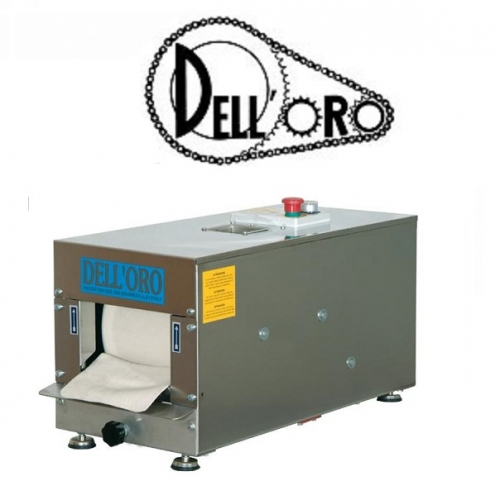
The Dell’oro Small Loaves/Finger Rolls Moulder is the compact option in our range. The operator drops a dough piece into the top and collects the moulded piece at the front.
Key Features
– It comes in two versions, for dough pieces of 10g to 100g or 10g to 250g.
– The 10g to 100g version shapes up to 2,500 pieces per hour.
– It has a stainless steel body and finish.
– It runs on a three-phase supply, and a single-phase conversion is available as an option.
The F300 is a practical small loaf moulder for bakeries producing finger rolls for iced buns and small loaves in high numbers. Dell’oro machines come with a one-year guarantee.
Producing Baguettes or Long-Shaped Breads?
Horizontal and vertical baguette moulders differ in the way they sheet and stretch the dough. A vertical moulder feeds each piece down through sheeting rollers, then rolls and lengthens it between belts. A horizontal moulder stretches the dough between a moving belt and a fixed surface.
Both of our baguette moulders are made by Merand.
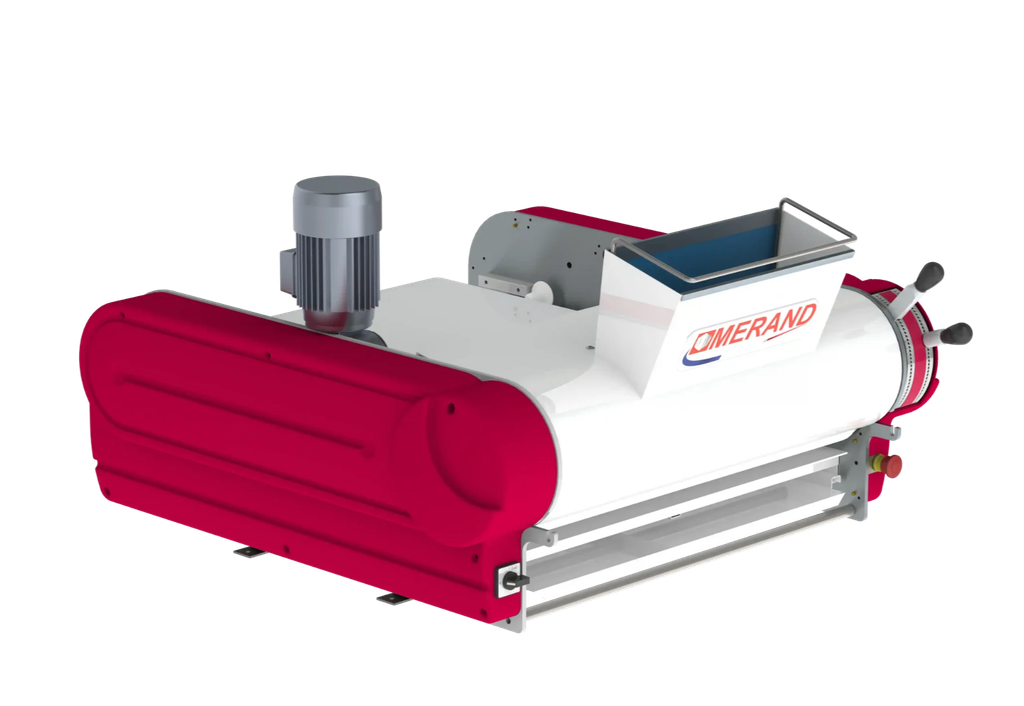
The Merand Horizontal Baguette Moulder uses the fixed and moving belt method. It generates very little heat, which helps protect traditional and delicate doughs.
Key Features
– It shapes dough pieces between 50g and 2,000g.
– It produces up to 1,800 pieces per hour across a 1,070mm working width.
– It measures 1,070mm wide, 1,000mm deep and 630mm high.
– Optional roll guides for 3 or 4 roll pieces and a short loaves guide let it produce rolls and sandwich loaves.
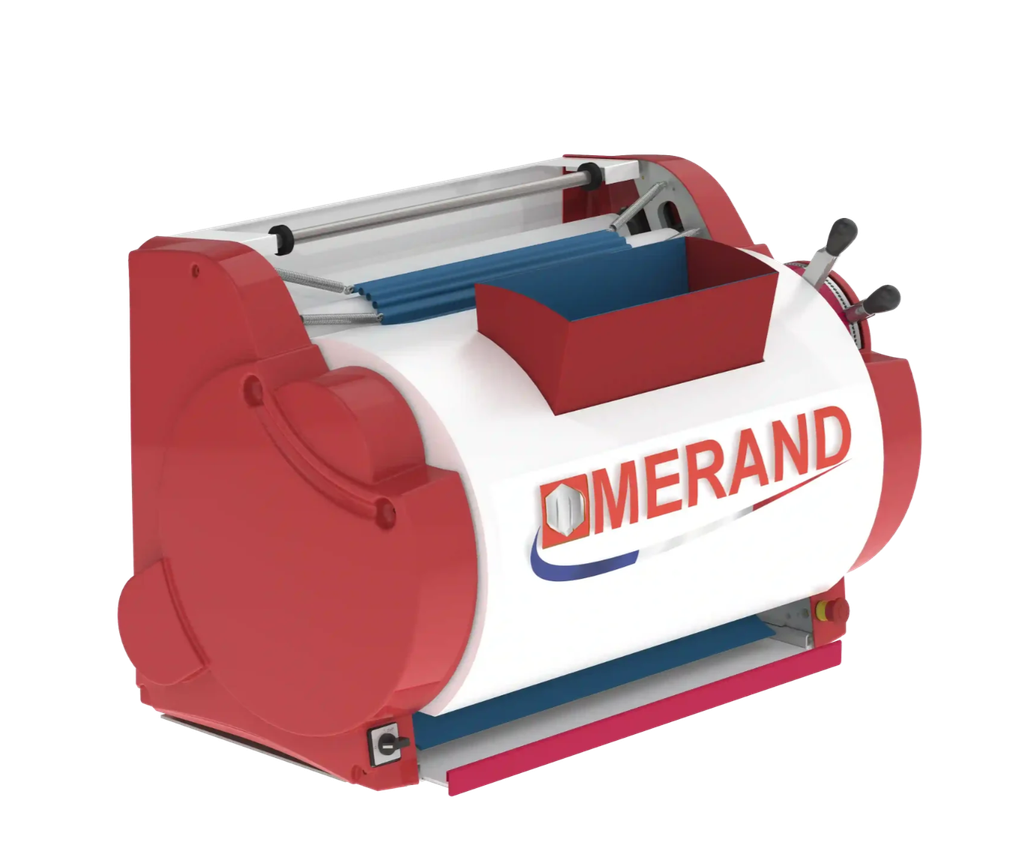
The Merand Vertical Baguette Moulder sheets the dough through three rollers of equal diameter, which avoids tearing. Two belts moving in opposite directions then stretch the piece to length.
Key Features
- It shapes dough pieces between 50g and 1,450g.
- It produces up to 1,500 pieces per hour across an 830mm working width.
- At 630mm deep, it takes up less bench depth than the horizontal model.
- Its belts can be changed in around 25 minutes.
- An optional progressive presheeting system adjusts the pre-sheeting roller to the height of each dough piece.
Both models offer the pointop system for automatic pointed ends on baguettes and similar breads. Other options include a stainless steel body, a wheeled stand, in-feed and out-feed belts and a left-hand handle.
The horizontal moulder is worth considering if you produce traditional baguettes or need to work with heavier, more delicate dough pieces, with a capacity of up to 2,000g. The vertical model takes up less space and can handle dough pieces up to 1,450g, making it a practical option for bakeries with limited room.
Need a Bread Moulder That Can Shape Loaves, Rolls and Baguettes?
A universal bread moulder uses adjustable rollers and pressure plates to change the shape and length of each product, so one machine can cover several lines.
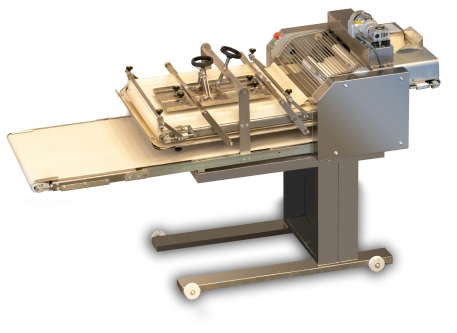
The Colbake Universal Bread Moulder (M70-U) produces Vienna loaves, tin bread, French sticks, rolls and baguettes with or without pointed ends. It forms a neat, even seam and is best suited for commercial kitchens and artisan bakeries that shape a wide mix of breads each day.
Key Features
– The gap between the sheeting rollers is adjustable, as is the height of the pre-sheeting roller.
– Adjusting the space between the pressure plates controls the length of each product.
– A separate setting switches baguette ends between rounded and pointed.
– The rollers are stainless steel with a non-stick coating, and the body and feet are stainless steel too.
This loaf moulding machine is the largest in our range at 2,453mm long, 907mm wide and 1,480mm high.
What Else Should You Check Before Buying a Commercial Bread Moulder?
How Automatic Does Your Bread Moulder Need to Be?
An automatic machine for moulding bread dough shapes each piece without hand rolling, although an operator usually still loads the dough. Fuller automation comes from linking the moulder to a divider and prover with feed belts. Consider these points:
– How many staff will load and unload the machine?
– How consistent does the shaping need to be across shifts?
– How often do you change between products, and how long does each changeover take?
– How will the moulder connect to your existing equipment?
All four of our moulders can be run by one operator. The Dell’oro bread moulder is fed by hand, while both Merand models offer in-feed and out-feed belts and the Pointop system for automatic pointed ends.
How Much Space Should You Allow?
Allow for the machine’s footprint plus a working room around it for loading, unloading, cleaning and maintenance. Measure the space before you compare dimensions, and check doorways on the delivery route for larger machines.
The Dell’oro moulder sits on a worktop, working best in areas with limited space.
The horizontal and vertical Merand bread moulders stand 630mm and 680mm high, respectively, and both can sit on an optional wheeled stand for easier cleaning around them. Both Merand models can also be ordered with the handle on the left if the standard right-hand position does not fit your layout.
Our universal bread moulder is a floor-standing machine over 2.4m long, so plan a dedicated area for it.
How Easy Is the Moulder to Clean and Maintain?
A bread moulder is easier to clean when it has food-safe belts, stainless steel surfaces and quick access to the rollers and belts.
Our bread moulders use food-safe belts and give easy access to the main parts for cleaning.
– A stainless steel body is optional on both Merand models.
– Both Merand models have easy-to-remove covers for maintenance.
– The belts on the vertical Merand can be changed in around 25 minutes.
– Our universal bread moulder has stainless steel rollers with a non-stick coating.
– Our aftersales team can supply parts.
What Should You Have Ready Before Speaking to Our Team?
At Creeds Direct, we have supplied dough moulders and bread moulders to commercial bakeries for over 60 years. Our team includes professional bakers who can match a machine to your products, volumes and space.
Have these details ready:
– The breads you shape, with your lightest and heaviest dough weights.
– The number of pieces you shape in your busiest hour and your daily running hours.
– The floor or bench space available, including doorway widths.
– Your power supply, single-phase or three-phase.
– The dividers, rounders and provers the moulder will work alongside.
– How many operators will run it?
If you’re still deciding which bread moulder is right for your bakery, speak to the Creeds Direct team and we can talk you through the machines that match your requirements.