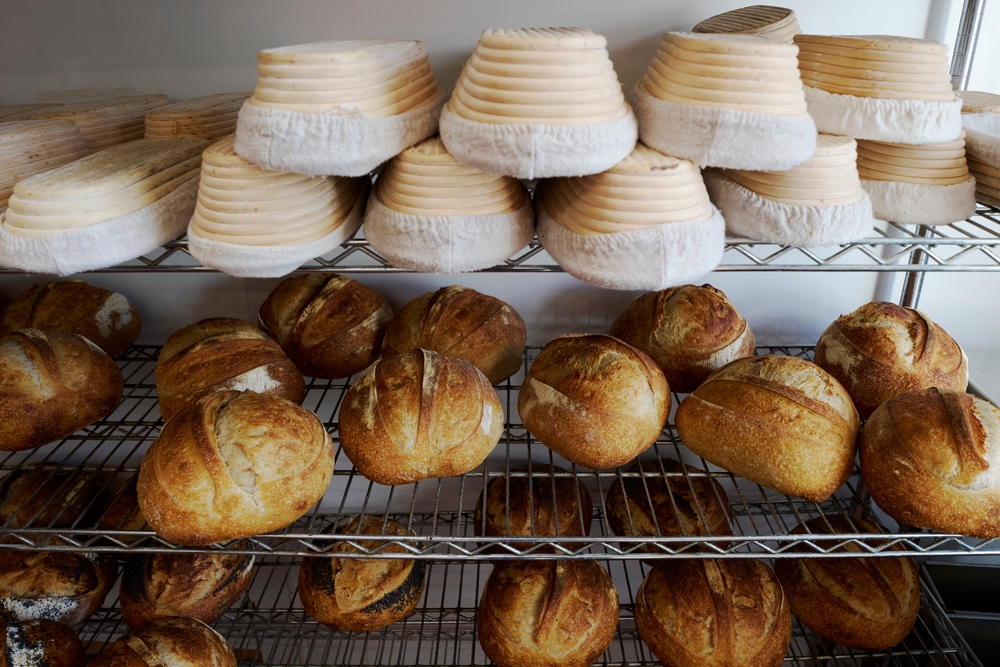
Any professional bakery producing fresh bread will rely on a good supply of proving baskets, also known as bannetons. For bakeries producing dozens or even hundreds of loaves a day, these simple baskets play an important role in creating consistent shapes, textures and finishes across every batch.
At Creeds Direct, our proving baskets range covers cane, wicker and plastic in every shape and size a working bakery needs, and this guide covers everything worth knowing before you order.
What Do Proving Baskets Do?
A proving basket supports dough during its final rise, holding the sides in place so the loaf grows upward rather than spreading outward.
Alongside shaping, a good basket gives you several practical benefits on a busy bench:
-It keeps loose, wet dough contained during a long final proof, which is common with slow-fermented sourdough.
-It encourages a stronger oven spring since the dough holds its shape right up until baking.
-Cane and wicker baskets leave a ridged, spiral pattern on the crust, giving your bread a recognisable artisan finish.
Cane, Wicker Or Plastic: Which Proving Basket Material Suits Your Bakery?
A good proving basket should do two things well: release dough cleanly and be reusable time and time again. Before you invest in your next batch of bannetons, here is how the three main options compare:
| Material | Best for | Cleaning | Finish on the crust |
| Cane | Sourdough and artisan loaves | Brush out any loose flour. Never wash with water | Distinct ridged and rustic patterns |
| Wicker | Traditional shaping with a firmer structure | Brush out any loose flour. Never wash with water | Deeper ridge patterns than cane |
| Plastic | High volume and budget-friendly bakeries | Dishwasher safe | Produces a more smooth surface |
Cane/Banneton Proving Baskets
Our cane options are perfect if you’re looking for traditional banneton proving baskets, and they’re the ones most bakeries reach for when sourdough is on the menu. The natural cane pulls moisture away from the dough surface as it proves, which helps develop a stronger crust and that signature spiral marking once it’s baked.
Wicker Proofing Baskets
Our wicker proofing baskets work in a similar way but hold their shape a little more firmly, which some bakers prefer for larger or wetter loaves. Both cane and wicker should be brushed out and air dried rather than washed.
Plastic Proving Baskets
If your bakery runs high volumes and needs equipment that goes straight in the dishwasher between batches, our plastic proving baskets are the practical choice. They won’t give you the ridged pattern of a cane basket, but they’re colour-coded by dough weight, so they are quickly identifiable on a busy bench and are durable for daily use.
What Shapes And Sizes Of Bread Proving Baskets Do You Need?
Choosing the right bread proving basket starts with matching the basket size to your scaled dough weight, then picking the shape that matches the loaf you want. Baskets are sized by the weight of dough they hold, not by the finished loaf weight, since dough expands as it proves.
–Round baskets produce a classic boule, the traditional round sourdough loaf.
–Oval baskets produce a bâtard, a longer loaf that’s popular for slicing.
–Baguette baskets hold the thin, elongated shape needed for French-style loaves.
–Rectangular and square baskets suit sandwich-style loaves or tin bread with straighter sides.
–Crown and triangular baskets create decorative shapes for speciality breads.
Our cane proving baskets are available in a range of sizes, from smaller 500g round baskets to larger 2000g oval baskets designed for bigger sourdough loaves. The size you’ll need depends on your dough weight and the shape of the loaf you want to create.
–500g round cane basket – measures approximately 21.5cm across and is ideal for smaller sourdough loaves.
–1000g round cane basket – measures around 25cm and is a popular all-round size
–1500g round cane basket – measures around 27cm and provides extra capacity for larger loaves.
–1500g rectangular cane basket – measures 40cm x 16cm and is designed for longer-shaped loaves.
–43cm cane baguette basket – made for a single long baton loaf rather than smaller rolls or multiple loaves.
We also carry the same sizes in our plastic proving baskets if you’re looking for a more cost-saving alternative.
If you’re unsure which size proving basket to choose, contact our expert team today. Our team includes an ex-professional baker who can help you select the right basket for the type of dough your bakery produces.
Should You Choose A Lined Or Unlined Proving Basket?
Using an unlined banneton or proving basket creates more rustic lines and patterns on your dough and needs a light dusting of flour before each use to stop the dough sticking. This is the traditional route, and it’s what most artisan and sourdough bakeries choose, since the pattern itself has become part of the bread’s appeal to customers.
A lined basket, using a cotton liner, creates a smoother surface for your dough. This makes it easier to score and allows you to create more decorative designs. Using the basket without the liner
We sell cotton liners and couche cloth separately, so you can line your proving baskets whenever you need to.
How Do You Season, Flour And Clean A Proofing Basket?
Before using a new proving basket, lightly mist it with water and dust it generously with flour. This first layer helps create a natural non-stick surface that improves with every bake, so there’s no need to wash it away after use.
To look after your basket between bakes:
- Brush out any loose flour and dough after each use instead of washing cane or wicker baskets with water.
- Allow baskets to dry fully before stacking, as trapped moisture can lead to mould.
- Give baskets a deeper clean every couple of months and check for any damaged strands or loose staples.
- Use plastic proving baskets if you need a quicker turnaround, as they can be cleaned in a dishwasher.
Every bread proofing basket should be brushed out, dried fully and checked over on a regular cleaning schedule, regardless of its material.
What Other Equipment Pairs Well With Proving Baskets?
A proofing basket is only one stage in the dough’s journey from mixer to oven, so it’s worth thinking about the equipment on either side of it.
-Use dough trays or a dough resting board for bulk fermentation before you divide and shape, since this early rest is a different stage to the final proof that happens in the basket.
-For baguettes and other freestanding loaves that don’t need a basket at all, couche cloth folds between loaves to support their shape on the bench.
-A proofing cabinet controls temperature and humidity around your baskets, keeping proof times consistent no matter what the weather’s doing outside.
-If you’re setting up a bakery from scratch, our guide to essential equipment for starting a successful bakery walks through everything else you’ll need beyond proving equipment.
A proofing basket and a proofing cabinet solve two different problems. The basket holds the loaf’s shape. The cabinet controls the environment the loaf proves in. Most commercial bakeries producing high volumes of dough use both together. Larger sourdough operations often add dedicated fermentation tanks to keep bulk fermentation consistent before dough ever reaches the basket stage.
Buy Proving Baskets From Creeds Direct
At Creeds Direct, we have supplied bakeries across the UK with professional equipment for over 50 years, and our team includes ex-professional bakers who can talk you through sizing, material and quantity before you order. Every proofing basket, banneton and couche cloth in our range is picked for durability under daily commercial use in professional kitchens and bakeries.
We offer competitive bulk pricing for large commercial orders, and our extensive stock means we can deliver them very quickly.
Orders placed before 1pm are dispatched the same day, and our specialists are on hand if you want advice on matching baskets to your dough weights before you purchase.
You can browse our complete proving basket range online or get in touch with our team directly for bulk pricing.
FAQs
Is a banneton proofing basket the same as a proving basket?
Yes, a banneton and proofing basket all describe the same piece of equipment. Banneton usually refers to the traditional cane version specifically, while proving basket and proofing basket are used more broadly to cover cane, wicker and plastic versions alike.
Can proving baskets go in a dishwasher?
Plastic proving baskets are dishwasher safe, and this is one of the main reasons high-volume bakeries choose them. Cane and wicker baskets should never go in a dishwasher or be washed with water at all. Brush them out and let them air dry instead.